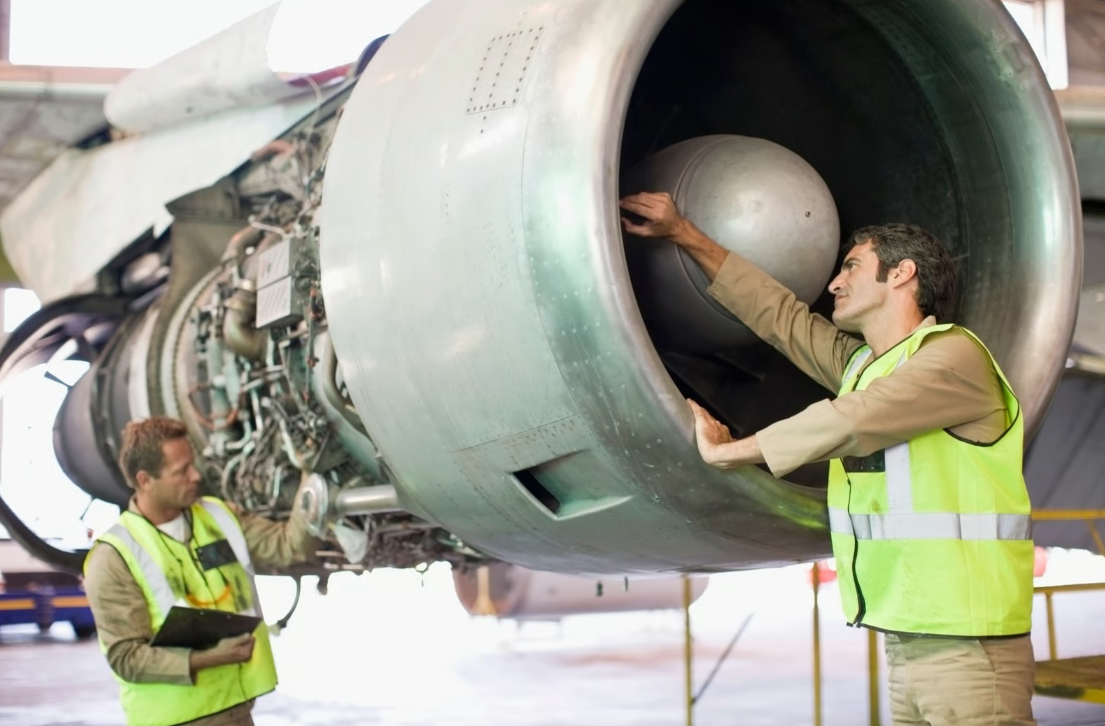
Ask almost any experienced aircraft maintenance technician what matters most, and you’ll likely hear answers such as skill, experience, attention to detail, and technical knowledge.
Rarely does someone immediately answer:
“Documentation.”
Yet in aerospace maintenance, repair, and overhaul (MRO) operations, documentation can be every bit as important as the repair itself.
A repair may restore an aircraft, component, or system to service. But documentation proves the repair was performed correctly, verifies regulatory compliance, establishes traceability, and protects everyone involved—from technicians and maintenance organizations to operators and passengers.
In many cases, a perfectly executed repair with incomplete documentation can create just as much risk as a poorly performed repair.
That’s why documentation remains one of the most critical elements of an effective AS9110 quality management system.
The Repair Tells a Story
Every maintenance action tells a story.
What was found?
What was repaired?
Who performed the work?
What procedures were followed?
What parts were used?
What inspections were completed?
What approvals were obtained?
Without documentation, that story disappears.
Future technicians, inspectors, customers, auditors, and regulatory agencies have no reliable way to understand what occurred.
The repair may have been completed flawlessly, but without evidence, there is no way to demonstrate it.
In aerospace maintenance, proof matters.
If It Isn’t Documented, It Didn’t Happen
Few phrases are more common in aviation quality management than:
“If it isn’t documented, it didn’t happen.”
While the statement may sound harsh, it reflects a fundamental reality of aerospace operations.
Documentation provides objective evidence that maintenance activities were completed according to approved procedures and regulatory requirements.
Without records, organizations cannot demonstrate:
- Compliance
- Traceability
- Airworthiness
- Accountability
- Process consistency
Regulators, customers, and auditors do not evaluate intentions.
They evaluate evidence.
Traceability Protects Everyone
One of the primary purposes of maintenance documentation is traceability.
Traceability allows organizations to answer critical questions years after work has been completed.
Questions such as:
- Which technician performed the work?
- What parts were installed?
- Were those parts properly approved?
- Which procedures were used?
- Were inspections completed?
- Were any deviations identified?
Strong traceability systems help organizations quickly investigate concerns, identify root causes, and demonstrate compliance when questions arise.
Without traceability, uncertainty increases.
And uncertainty is something aerospace organizations work hard to eliminate.
Documentation Is a Safety Tool
Many maintenance professionals view documentation as a compliance requirement.
In reality, documentation is also a safety tool.
Aircraft maintenance often involves multiple technicians, departments, shifts, and facilities.
Accurate records help ensure that critical information is communicated effectively throughout the maintenance process.
Good documentation helps prevent:
- Missed inspections
- Incomplete repairs
- Improper part installations
- Duplicate work
- Communication breakdowns
When information is documented properly, maintenance teams can make informed decisions based on reliable records rather than assumptions.
Regulatory Expectations Continue to Increase
Aviation regulators around the world place significant emphasis on maintenance documentation.
Regulatory agencies expect organizations to maintain accurate records demonstrating:
- Airworthiness
- Compliance with approved data
- Personnel qualifications
- Maintenance history
- Inspection activities
- Part traceability
Incomplete or inaccurate records can create significant challenges during inspections, investigations, and audits.
Even when maintenance work is technically sound, documentation deficiencies may result in findings, corrective actions, or regulatory scrutiny.
For maintenance organizations, documentation is not simply paperwork—it is part of regulatory compliance.
Customer Confidence Depends on Documentation
Aircraft operators place tremendous trust in maintenance providers.
That trust extends beyond technical capability.
Customers want confidence that maintenance activities are:
- Properly controlled
- Fully traceable
- Consistently documented
- Performed according to approved procedures
In many cases, customers never personally witness the maintenance work being performed.
The records become the evidence they rely on.
Well-maintained documentation demonstrates professionalism, accountability, and quality system maturity.
Poor documentation raises questions—even when the maintenance itself was completed correctly.
Documentation Reduces Liability
One of the least discussed benefits of strong documentation is liability protection.
When incidents, disputes, or investigations occur, maintenance records often become one of the most important sources of evidence.
Accurate documentation can demonstrate:
- Work scope
- Compliance with procedures
- Inspection completion
- Personnel authorization
- Corrective actions taken
Organizations that maintain detailed and accurate records are generally in a much stronger position to defend maintenance decisions and demonstrate due diligence.
Poor documentation creates uncertainty.
And uncertainty can become costly.
Why Documentation Errors Are So Common
Despite its importance, documentation remains one of the most common sources of audit findings within aerospace maintenance organizations.
Common issues include:
- Missing signatures
- Incomplete work orders
- Illegible records
- Incorrect part information
- Delayed record completion
- Inconsistent record retention
Many of these issues occur because documentation is viewed as something separate from the maintenance activity itself.
In reality, documentation should be considered part of the repair process—not something completed afterward.
AS9110 and Documentation Control
AS9110 places significant emphasis on documentation because maintenance organizations depend heavily on accurate records to maintain safety, compliance, and customer confidence.
Strong documentation systems support:
- Traceability
- Configuration control
- Corrective action management
- Personnel qualification verification
- Maintenance history retention
- Regulatory compliance
The standard recognizes that maintenance quality cannot be separated from maintenance records.
Both are essential to operational effectiveness.
The Best Maintenance Organizations Think Differently
High-performing maintenance organizations rarely view documentation as an administrative burden.
Instead, they recognize documentation as a critical part of delivering a quality service.
Their mindset is simple:
The repair is not complete until the documentation is complete.
This perspective creates stronger:
- Accountability
- Communication
- Traceability
- Compliance
- Customer confidence
Most importantly, it helps ensure that maintenance information remains available long after the repair itself has been completed.
Final Thoughts
Aircraft maintenance is built on precision, accountability, and trust.
While repairs restore equipment to service, documentation provides the evidence that those repairs were performed correctly, safely, and in compliance with regulatory and customer requirements.
In an industry where safety and reliability are non-negotiable, documentation is far more than paperwork.
It is the foundation of traceability, compliance, liability protection, and customer confidence.
Because in aerospace maintenance, the repair may fix the problem—but the documentation proves it was fixed correctly.